About the Khoury Technique
The Khoury Technique, also known as the Split Bone Block Technique, is one of the most reliable and biologically sound methods for bone reconstruction in implantology.
Developed by Professor Fouad Khoury, this approach enables clinicians to reconstruct atrophic alveolar ridges using autogenous bone, achieving predictable results in both horizontal and vertical dimensions.
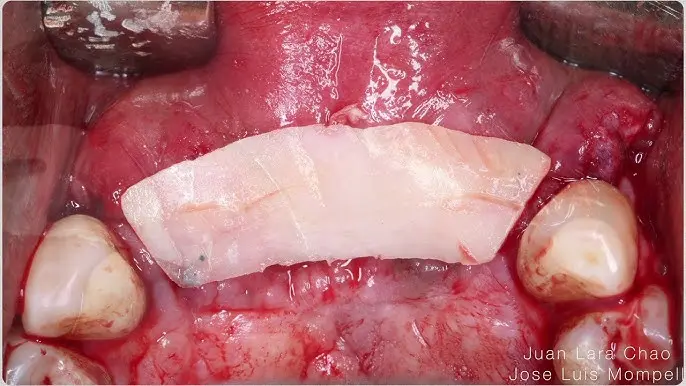
Unlike conventional grafting procedures that rely on synthetic materials or non-rigid scaffolds, the Split Bone Block Technique is based entirely on the use of thin autogenous cortical bone plates. These are harvested from intraoral donor sites—typically the mandibular ramus or symphysis—and shaped into “bone shells” that define the contours of the future ridge.
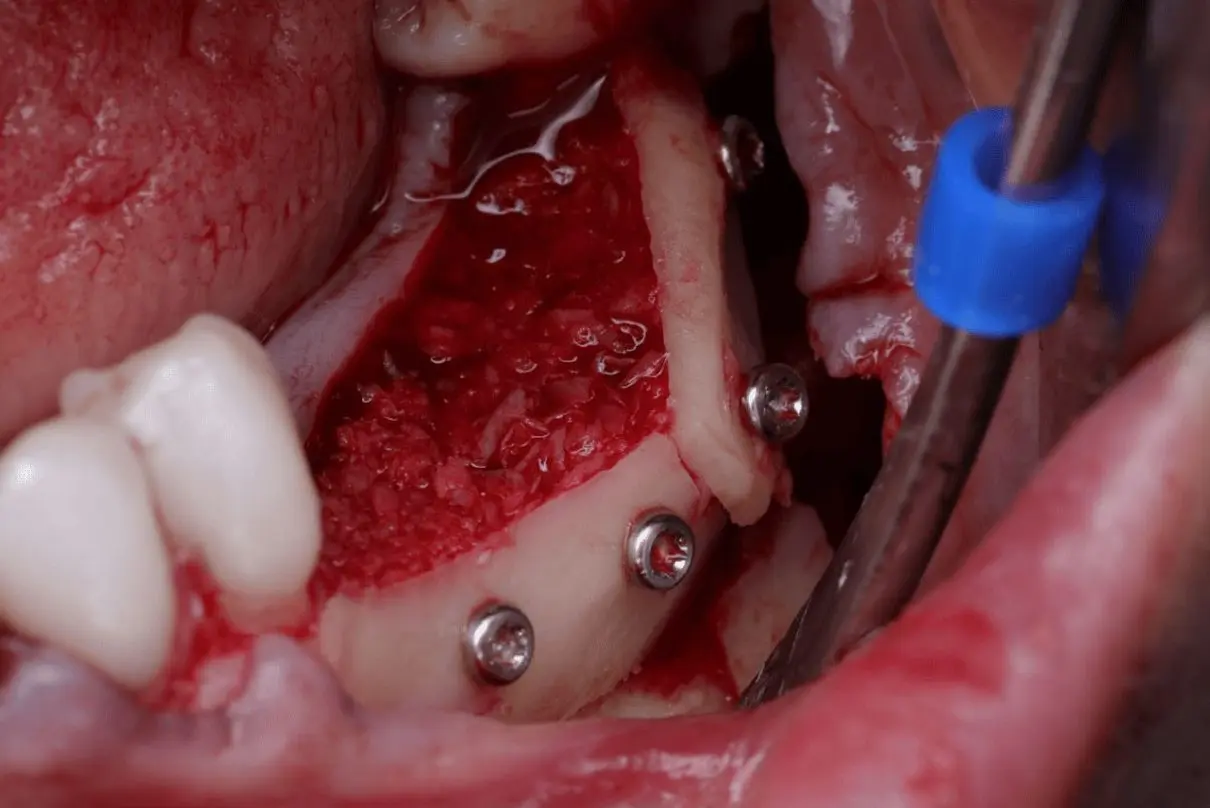
Principles of the Khoury Technique
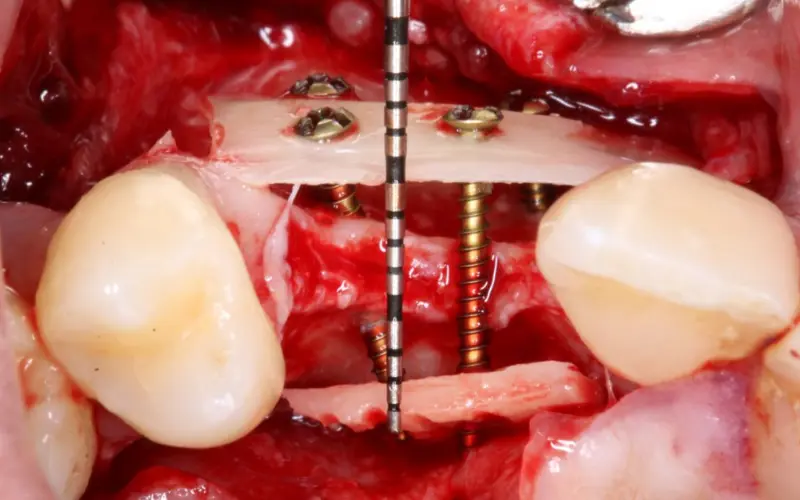
The success of this method lies in its biological foundation. Once the bone plates are fixed to the recipient site, the space between them is filled with autogenous bone chips, forming a natural compartment where new bone can regenerate.
This three-dimensional framework promotes osteogenesis while preserving the volume and contour of the ridge.
Khoury Technique follows the fundamental principles of bone healing:
- The graft remains well vascularized thanks to the thinness of the bone plates.
- The compartment is completely autogenous—no foreign materials are used.
- The rigid structure provides long-term stability and resists resorption.
To apply these principles in real clinical scenarios, you can practice every step of the technique in our Bone Reconstruction Course in Human Cadaver.
Main Advantages for the Clinician
Mastering this technique provides several practical and biological benefits that are especially relevant for advanced implantology:
- Stable, predictable outcomes in both vertical and horizontal augmentation.
- Minimal resorption compared to particulate or mixed grafts.
- Complete biocompatibility, as the graft is 100% autogenous.
- Excellent control of ridge contour—essential for aesthetic implant cases.
- Scientific validation, supported by decades of clinical research and follow-up studies.
The Khoury Technique can be applied in multiple clinical situations:
- Horizontal ridge augmentation prior to implant placement.
- Reconstruction of combined vertical and horizontal defects.
- Alveolar ridge preservation after tooth extraction.
- Secondary bone reconstruction in implant failure cases.
Compared with conventional grafting and membrane-based approaches, the Khoury Technique provides a rigid autogenous framework that helps maintain the desired ridge volume and contour during healing.
Harvesting and Handling the Bone Blocks
The surgical precision required for this method is one of the reasons it demands formal training. Clinicians must be familiar with:
- Intraoral donor sites (ramus and symphysis).
- Safe harvesting procedures that preserve donor anatomy.
- Correct adaptation and fixation of thin bone plates.
- Filling the compartment with autogenous chips using appropriate instruments.
When properly executed, these steps result in a strong, integrated bone base suitable for implant placement after a short healing period—typically four to six months.
However, careful case selection and precise surgical execution are essential, particularly when treating extensive bone defects.
Why Surgeons Should Learn the Khoury Technique
While the concept appears simple, the surgical sensitivity and anatomical precision required cannot be acquired through theory alone.
That is why DL Oral Surgery Academy offers The Bone Reconstruction Course, where participants learn the Khoury Technique (Split Bone Block) and practice directly on human cadaver specimens under expert supervision.
This hands-on environment allows clinicians to:
- Perform every step of the technique on realistic anatomy.
- Gain full understanding of soft and hard tissue handling.
- Build confidence before performing the procedure on patients.
- Discuss case selection, surgical planning, and common complications.
The course provides a step-by-step methodology, helping participants understand both the biological rationale and the clinical execution of the technique before applying it to patients.
Join The Bone Reconstruction Course in Madrid Learn in USA? Hawaii Course!
Clinical Relevance in Today’s Implantology
Modern implantology is increasingly focused on minimally invasive yet long-lasting regenerative approaches.
The Khoury Technique embodies these principles by combining autogenous biology, anatomical precision, and reproducible results.
Its widespread adoption in Europe and beyond demonstrates its value in achieving long-term implant stability and aesthetic integration—even in highly resorbed ridges.
For clinicians seeking to advance from guided bone regeneration to full autogenous block reconstruction, learning this technique represents a natural and essential step.
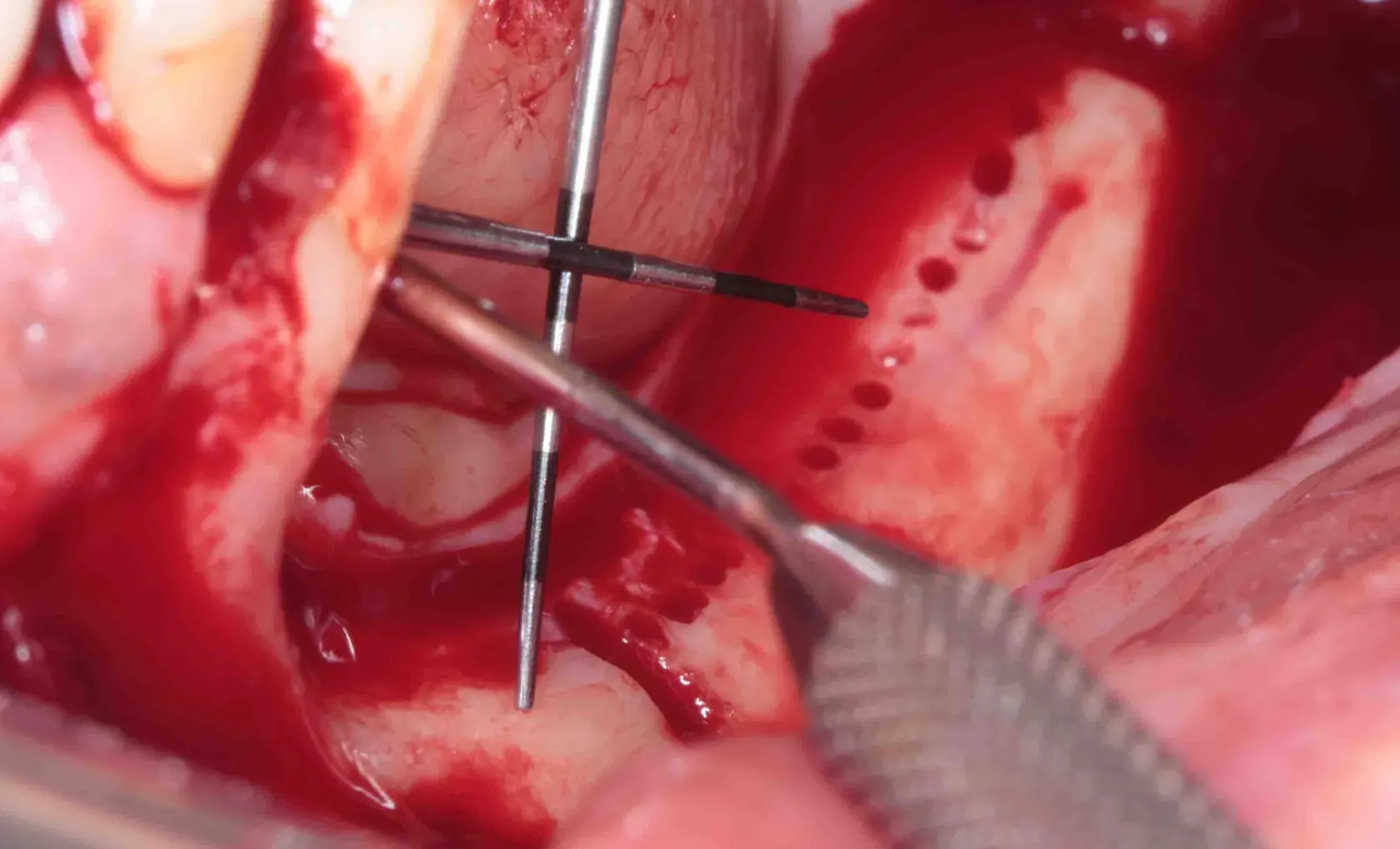
Learn the Khoury Technique Step by Step
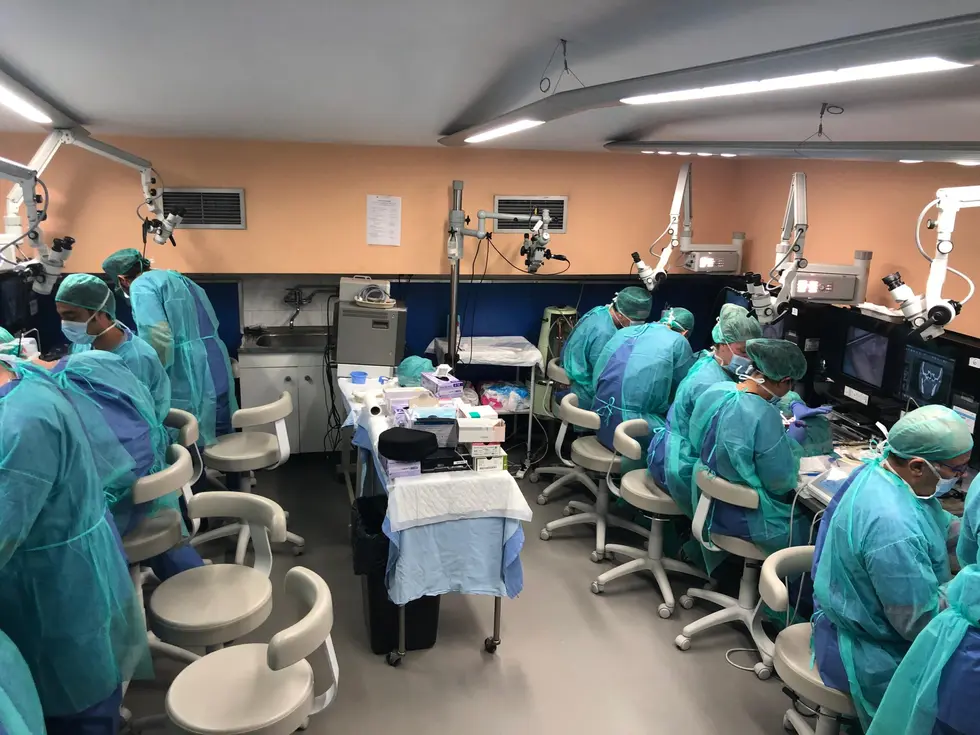
The Bone Reconstruction Course offered by DL Oral Surgery Academy combines theoretical instruction with anatomical dissection and bone harvesting.
Within this program, participants learn the Khoury Technique (Split Bone Block) through direct, supervised practice on human cadaver specimens.
Course highlights:
- Human cadaver specimens for anatomical realism.
- Small groups for personalized supervision.
- Emphasis on biological understanding and surgical precision.
- Certificate of attendance upon completion.
By the end of the training, clinicians are able to confidently harvest, shape, and stabilize bone plates, applying the same principles later in clinical practice.
Join the Next Edition
Ready to integrate the Khoury Technique into your daily implant practice?
Discover the course details and next available dates.
You can also explore other Oral Surgery and Implantology Courses available at DL Oral Surgery Academy.